Loading...
Turn ChatGPT into a marketing content machine. Organize by campaign, save winning prompts, and build a library of proven frameworks.
Free forever | Trusted by 16,000+ users
You use ChatGPT for headlines, blog posts, ad copy, SEO, email campaigns—everything. But great content gets lost in a chaotic conversation list. That perfect prompt framework? Buried somewhere in 200 conversations.
Without organization, you recreate work, lose winning approaches, and can't build on what's already working.
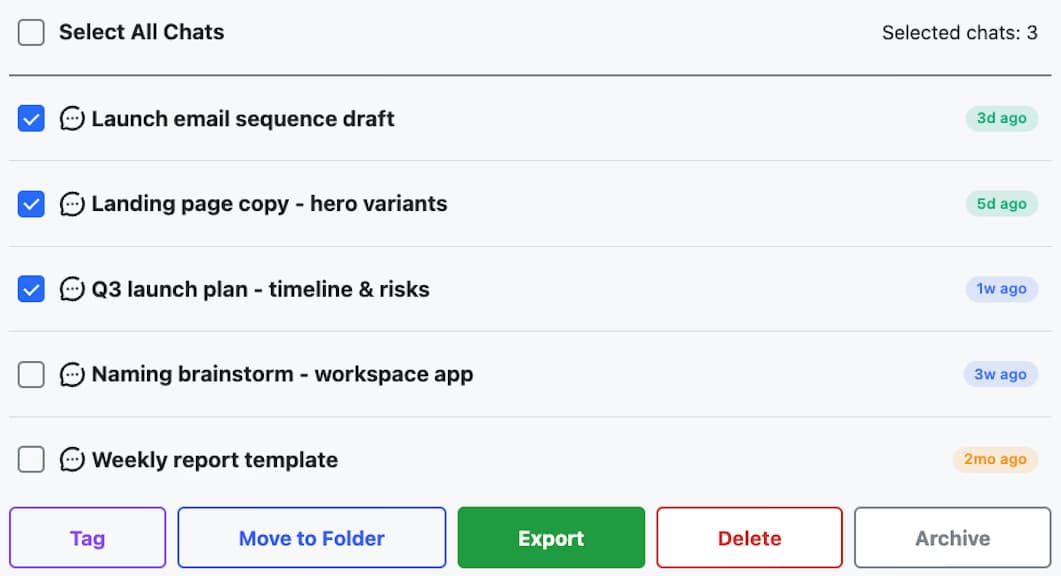
ChatGPT Toolbox helps you organize every marketing conversation. Create campaign folders, save winning prompts, search past content, and export for client approval or publication.
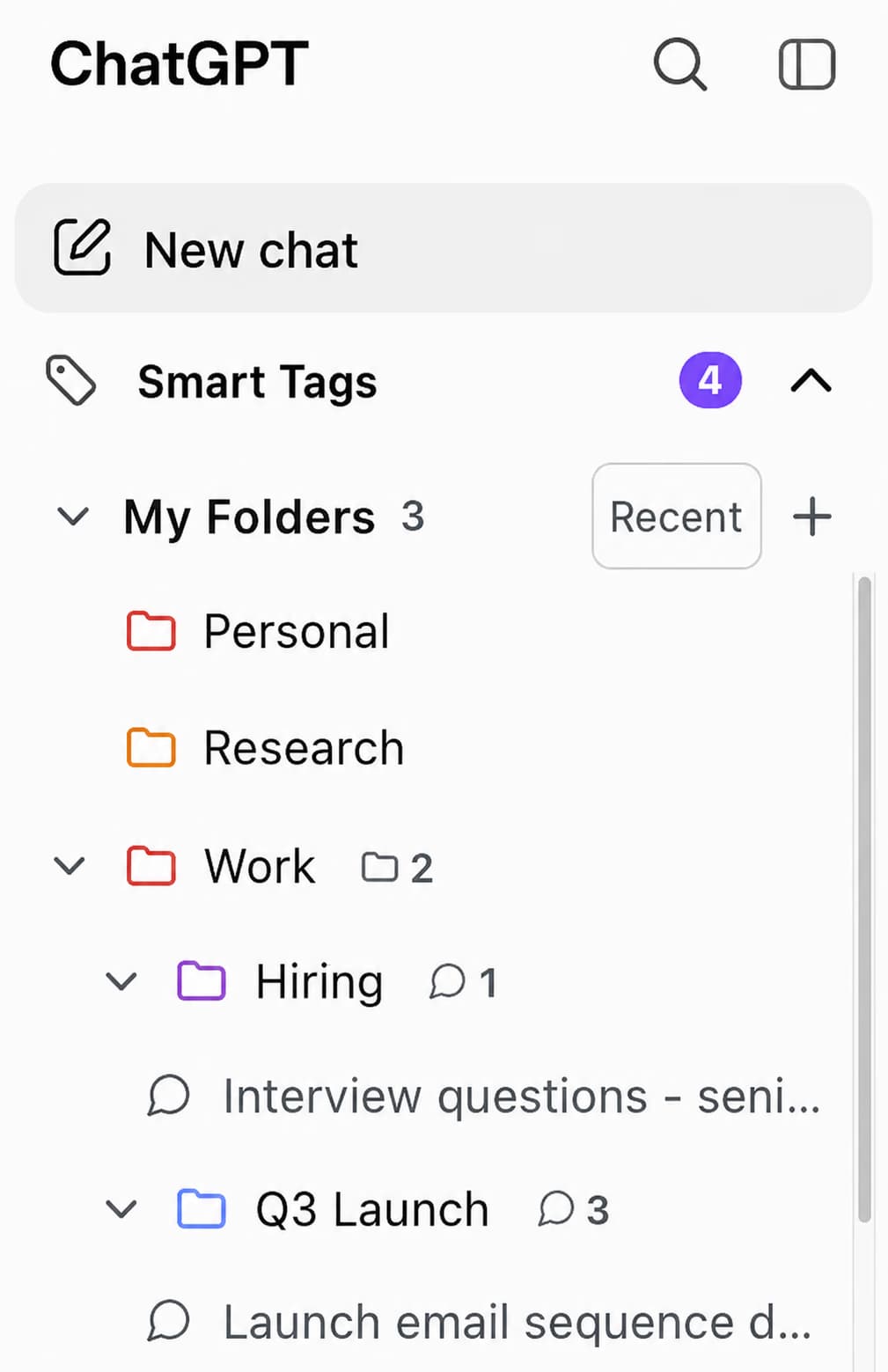
Create folders for each campaign, client, or content type. Keep Q1 separate from Q2, Client A separate from Client B.
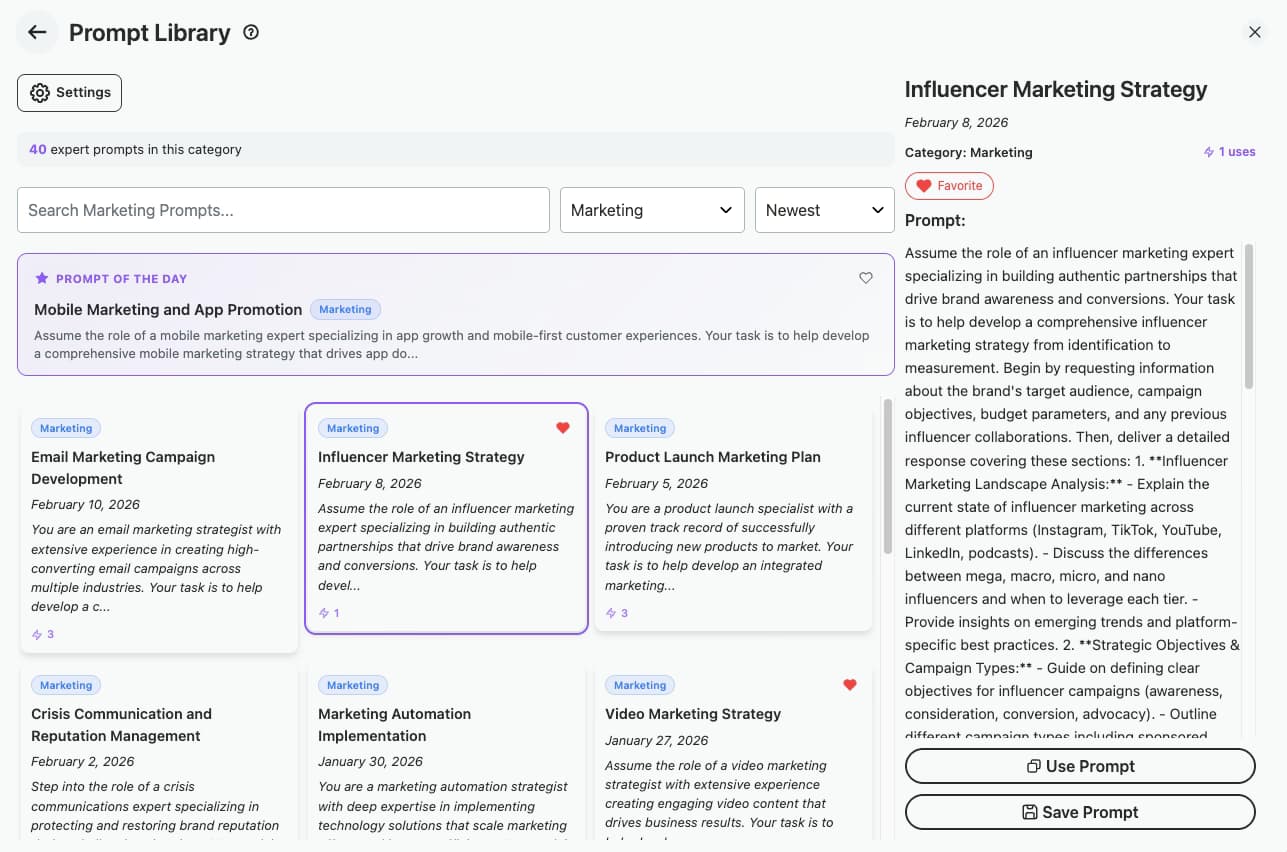
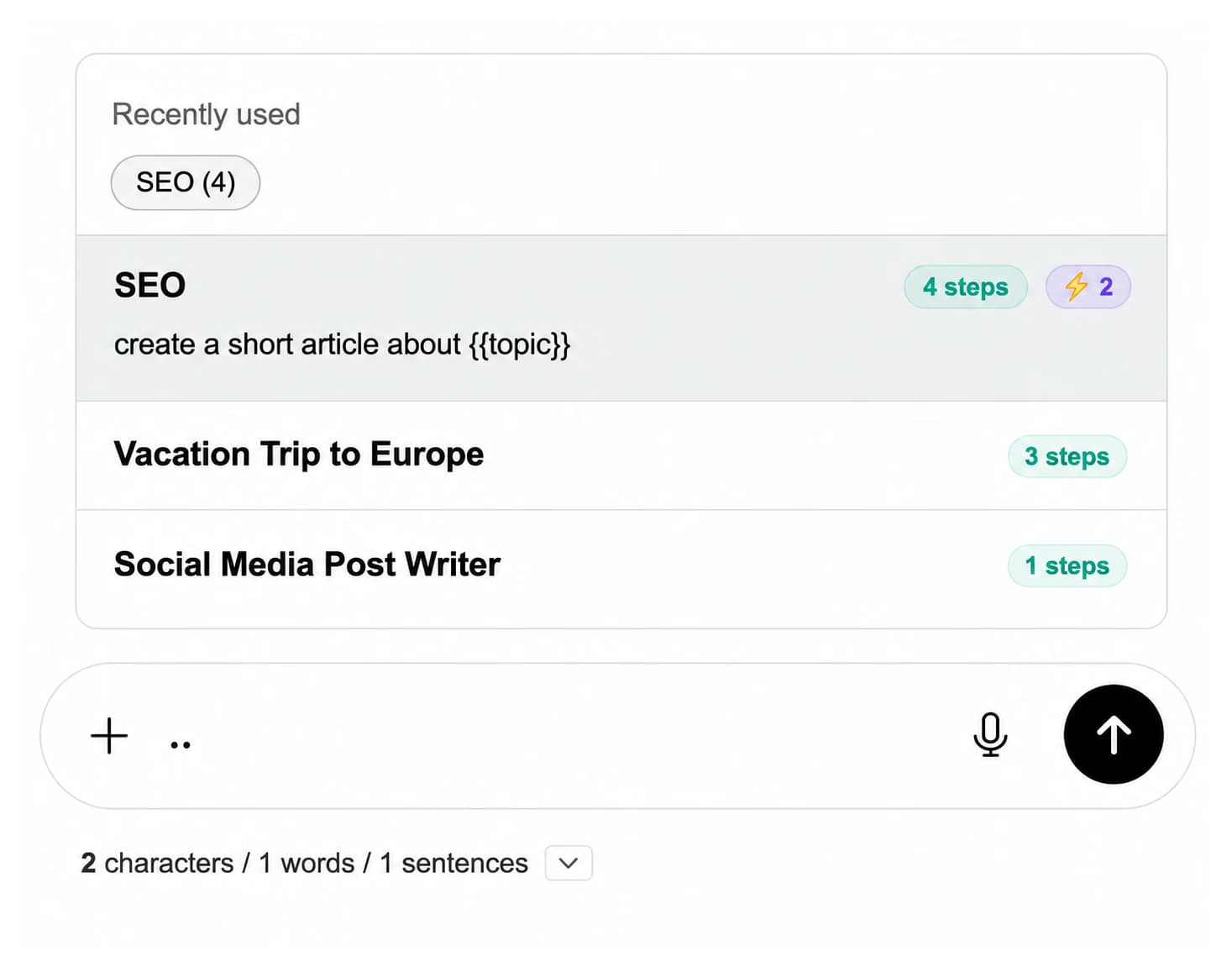
That prompt that generated perfect ad copy? Save it. Pin your best-performing prompt templates for reuse.
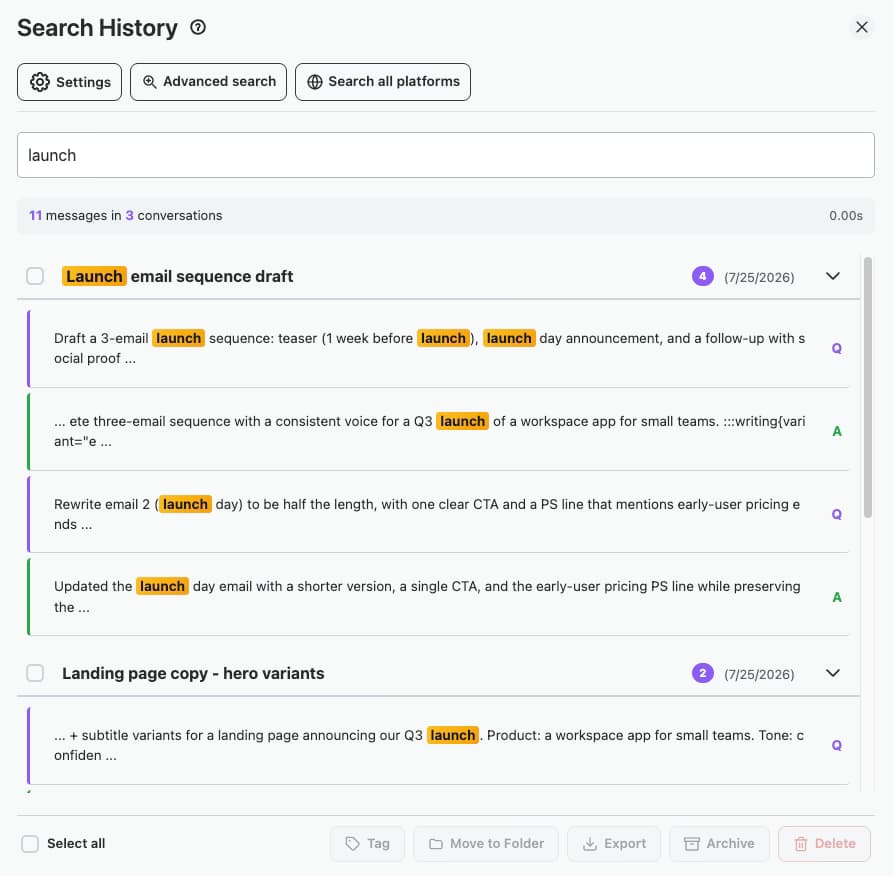
Need that headline framework from last quarter? Search across all your marketing conversations instantly.
Export ChatGPT-generated copy as TXT files. Share with clients, add to content calendars, or archive approved content.
$99 one-time
Organization makes ChatGPT a marketing superpower. Create folders for each campaign, client, or content type. Save prompts that generate great copy. Build a library of frameworks, headlines, and approaches you can reuse and refine.
Yes! When a prompt generates great copy, add that conversation to a 'Winning Prompts' folder. Pin your most-used prompt templates for instant access. Over time, you build a personal library of proven marketing prompts.
Create a folder for each campaign or client. Use subfolders for content types (Social, Email, Blog, Ads). When you generate content, add it to the right folder. Search across campaigns to find successful approaches.
Yes! Export any conversation as TXT or JSON. Use bulk export to download entire campaigns. Share with clients, add to Google Docs, or archive approved content.
Absolutely. Organize SEO conversations by project or keyword cluster. Save keyword research, meta descriptions, and content outlines. Search past SEO strategies to find what worked. Export content for implementation.
Stop losing winning content. Build a library of proven frameworks and prompts.