What is ChatGPT?
ChatGPT is OpenAI's conversational AI assistant, launched in November 2022. It runs on the current GPT model lineup (GPT-6 Astra, GPT-5.6 Sol, GPT-5.6 Terra, GPT-5.6 Luna, GPT-5.5, GPT-5.5 Pro, GPT-5.4, GPT-5.4 Pro, GPT-5.4 mini, GPT-5.4 nano) and is available at chatgpt.com and in mobile apps, with a free tier and paid Plus, Pro, Team and Enterprise plans.
What is a token in ChatGPT?
A token is the unit of text a model reads and writes: roughly four English characters, or about three quarters of a word. Context windows, rate limits and API prices are all counted in tokens. The free token counter on this site estimates the count for any pasted text.
What is the difference between a context window and memory?
The context window is what the model can see in the current conversation, measured in tokens; when it fills, the earliest turns drop out. Memory is a separate ChatGPT feature that stores facts about you across conversations and injects them into new ones. A large window does not give the model memory, and memory does not enlarge the window.
What ChatGPT models are available in 2026?
GPT-6 Astra, GPT-5.6 Sol, GPT-5.6 Terra, GPT-5.6 Luna, GPT-5.5, GPT-5.5 Pro, GPT-5.4, GPT-5.4 Pro, GPT-5.4 mini, GPT-5.4 nano. GPT-4o, o3, o4-mini and earlier models were retired on February 13, 2026 and replaced by the GPT-5.x family; GPT-4.1 and the original GPT-5 remain on the API but are no longer frontier models.
What is prompt engineering?
The practice of writing prompts that get better answers: naming a role, stating the task and the output format, adding constraints, giving examples, and asking for reasoning before the answer. The prompt formatter on this site wraps any prompt in those structures.
What is RLHF?
Reinforcement Learning from Human Feedback: human reviewers rank model outputs and the model is trained to prefer the higher-ranked ones. It is the main technique OpenAI uses to make ChatGPT follow instructions and decline harmful requests, on top of the base pre-training.
What is a hallucination, and how do I catch one?
A confident answer that is wrong: an invented citation, a date, a statistic, a function that does not exist. Ask the model for its sources and check them, prefer answers grounded in web search or your own documents, and treat numbers and names as unverified until you have confirmed them.
What is AI Toolbox?
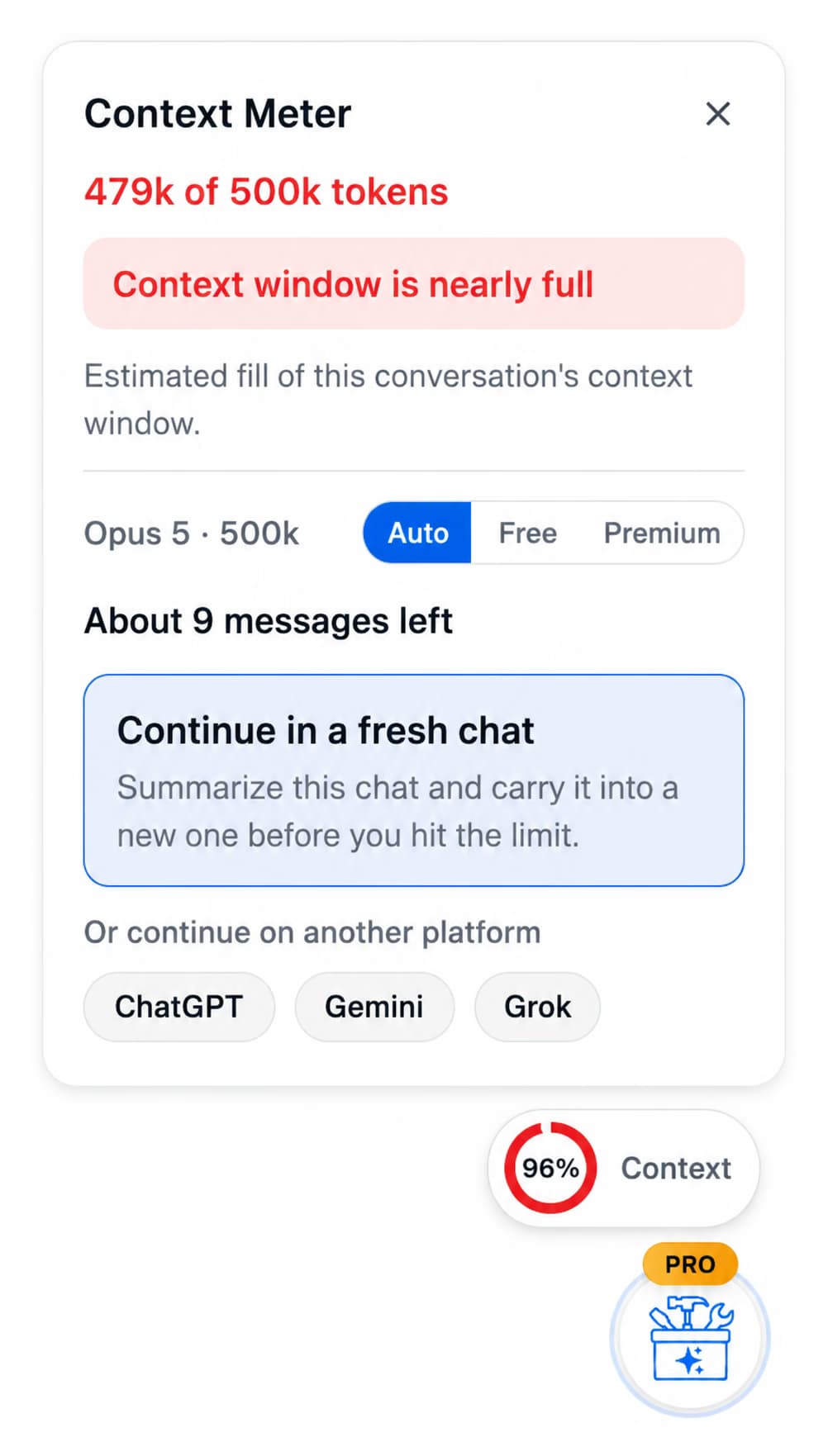
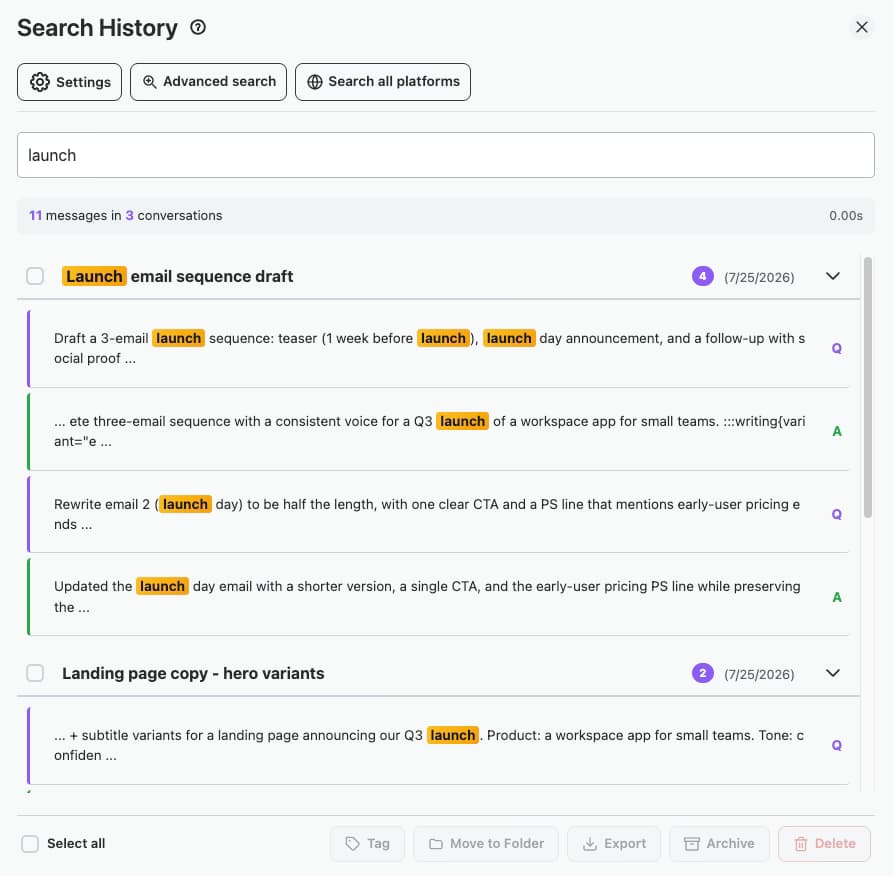
A browser extension for Chromium browsers, formerly ChatGPT Toolbox, with modules for ChatGPT, Gemini, Claude and Grok in one install. It adds folders, full-text search, bulk archive, delete and export, a prompt library with chains, pins, a context gauge and a media gallery. Used by 40,000+ people, rated 4.7/5 on the Chrome Web Store. The free plan covers the basics; Premium is $9.99/month or $99 once per module.
 ChatGPT
 Gemini
 Claude
 Grok
Grok