 ChatGPT
 ChatGPT Models Explained: GPT-6 Astra and Which Is BestThe latest ChatGPT model is GPT-6 Astra (Sept 3, 2026), GPT-6 Pro on Pro, Business and Enterprise. GPT-5.6 Sol runs paid chats, Luna runs Free and Go.12 min read
Loading blog posts...

ChatGPT
Which model to pick and why: GPT-6 Astra, GPT-5.6 Sol, GPT-5.6 Terra, GPT-5.6 Luna, GPT-5.5, GPT-5.5 Pro, GPT-5.4, GPT-5.4 Pro, GPT-5.4 mini, GPT-5.4 nano, the reasoning modes behind them, token and character limits, and what each plan includes. The historical guides are kept as a dated record of the o-series and GPT-4 era that OpenAI retired in 2026.
Model facts are OpenAI's published specs at each article's date. AI Toolbox works with every model and lets you file conversations by model in folders.
Start here
The lineup comparison, the reasoning modes, the input limits and what each plan costs.
ChatGPT Models Explained: GPT-6 Astra and Which Is BestThe latest ChatGPT model is GPT-6 Astra (Sept 3, 2026), GPT-6 Pro on Pro, Business and Enterprise. GPT-5.6 Sol runs paid chats, Luna runs Free and Go.12 min read ChatGPT Reasoning Modes: Instant, Thinking, and Pro Explained (2026)Compare ChatGPT's three reasoning modes side-by-side: Instant for fast responses, Thinking for chain-of-thought, and Pro for the highest reasoning depth. Token limits, decision rules, and when to use each, verified May 2026.10 min read
 ChatGPT Character & Word Limit: What You Can Input (2026)Complete guide to ChatGPT token limits per model: context windows, chunking strategies and a comparison table for the GPT-5.x lineup.9 min read
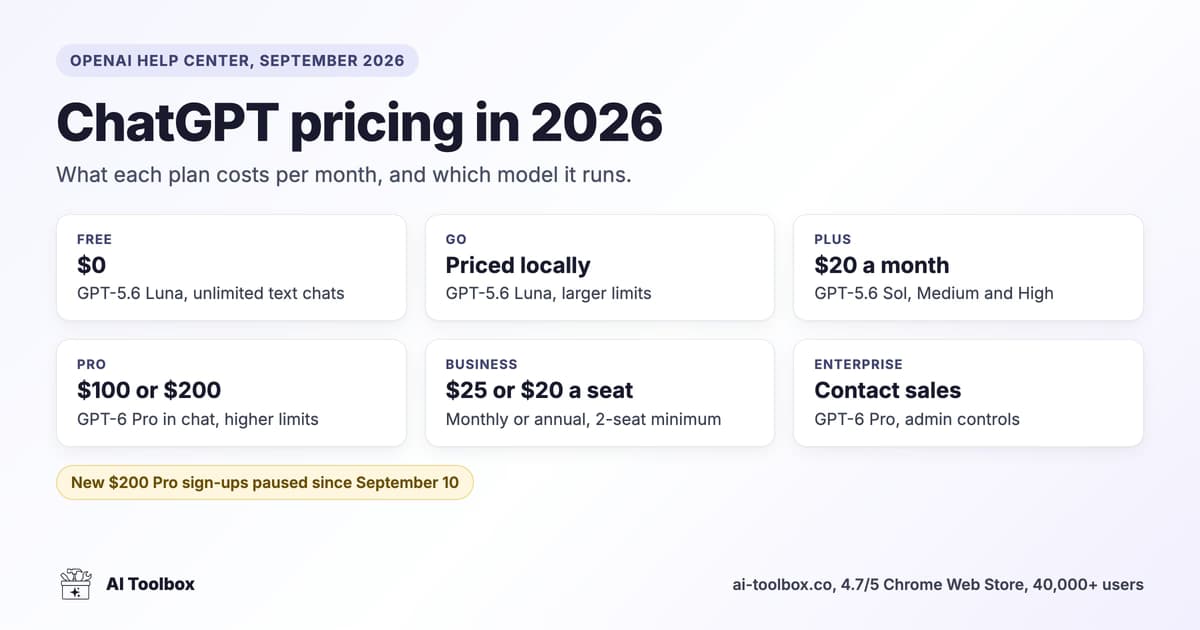 ChatGPT Pricing (September 2026): Free, Go, Plus, Pro, BusinessChatGPT costs $0 on Free, $20 on Plus, $100 or $200 on Pro, and $25 or $20 per seat on Business; Go is priced locally. Models and limits per plan.7 min read
All 13 guides
Each group opens with the native ChatGPT answer, then the guides that go deeper. Newest first inside a group.
The GPT-5.x family, Instant vs Thinking vs Pro, context windows, message limits and plan pricing.
ChatGPT Reasoning Modes: Instant, Thinking, and Pro Explained (2026)Compare ChatGPT's three reasoning modes side-by-side: Instant for fast responses, Thinking for chain-of-thought, and Pro for the highest reasoning depth. Token limits, decision rules, and when to use each, verified May 2026.10 min readChatGPT Character & Word Limit: What You Can Input (2026)Complete guide to ChatGPT token limits per model: context windows, chunking strategies and a comparison table for the GPT-5.x lineup.9 min readChatGPT Models Explained: GPT-6 Astra and Which Is BestThe latest ChatGPT model is GPT-6 Astra (Sept 3, 2026), GPT-6 Pro on Pro, Business and Enterprise. GPT-5.6 Sol runs paid chats, Luna runs Free and Go.12 min readChatGPT Pricing (September 2026): Free, Go, Plus, Pro, BusinessChatGPT costs $0 on Free, $20 on Plus, $100 or $200 on Pro, and $25 or $20 per seat on Business; Go is priced locally. Models and limits per plan.7 min read ChatGPT New Model: Detailed Model Spec & AnalysisExplore the latest ChatGPT New Model and its groundbreaking model spec. Learn about architecture improvements, enhanced context handling, and future AI developments.3 min read
GPT-4, GPT-4.5, o1, o3 and GPT-3.5 as they were when they shipped, each marked Historical.
 ChatGPT O1 vs GPT-4: Which Model Should You Use? (Historical)A historical comparison of ChatGPT O1 vs GPT-4. Both models were retired in 2026 in favor of the GPT-5.x family. Use this guide to understand the reasoning vs general-purpose tradeoff that the GPT-5.5 pro and GPT-5.4 pro variants now address.12 min read
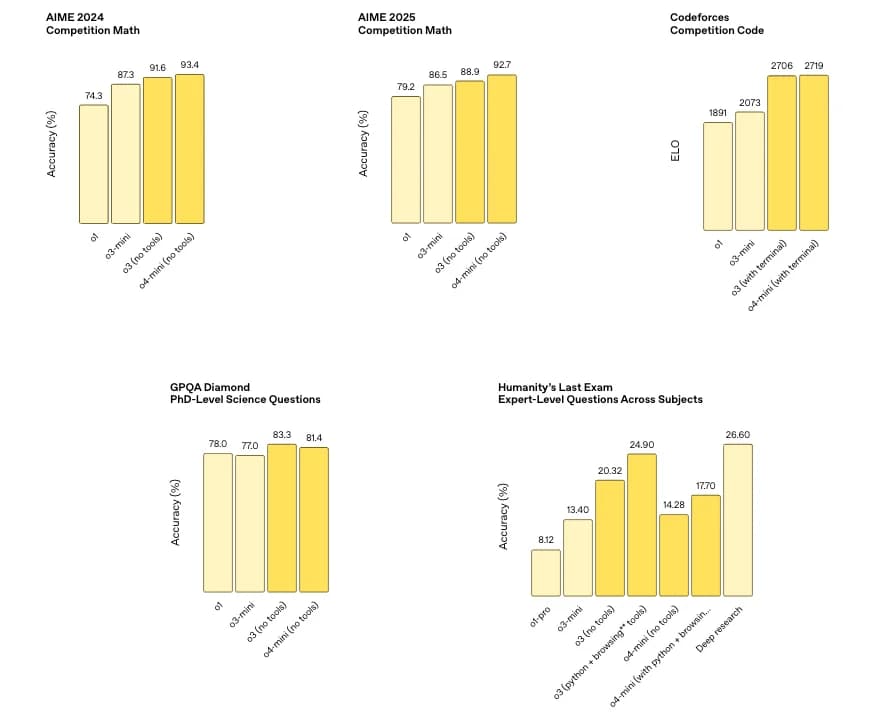 OpenAI o3 and o4-mini: ChatGPT Models Explained (Historical)A historical look at OpenAI's o3 and o4-mini models, retired by OpenAI on February 13, 2026. The current GPT-5.5 pro, GPT-5.4 pro, and GPT-5.4 mini variants now cover the reasoning, visual understanding, and tool-use roles these models played.18 min read
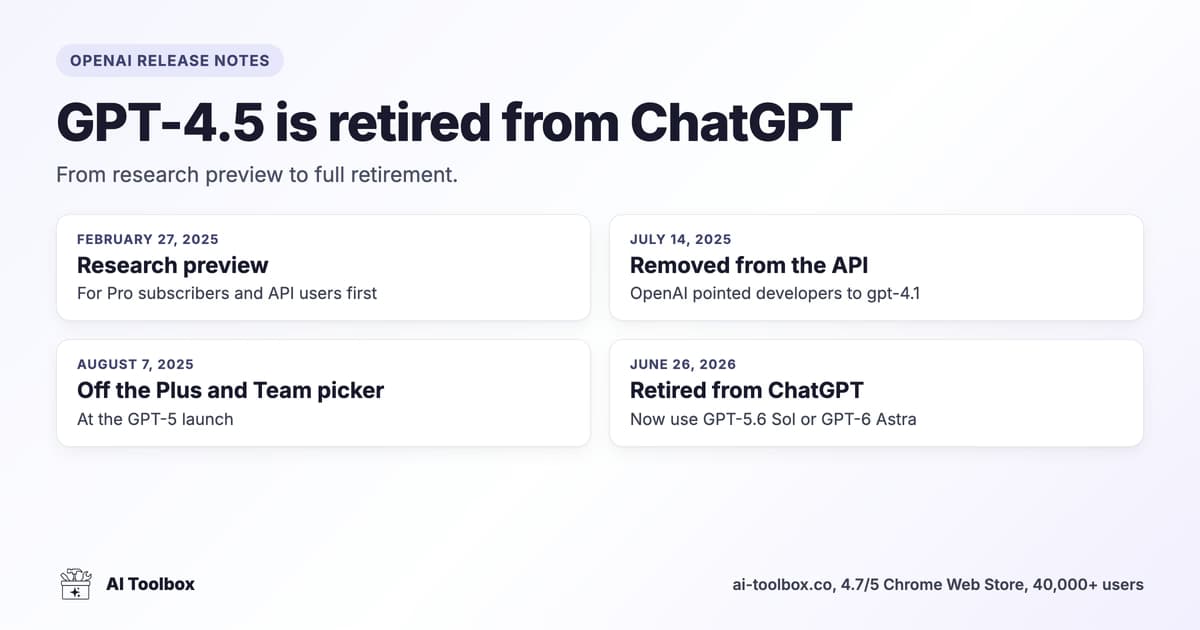 ChatGPT 4.5 (Orion): Retired, and What to Use NowGPT-4.5 was OpenAI's February 2025 research preview, dropped from Plus when GPT-5 launched and retired from ChatGPT on June 26, 2026. What replaces it now.7 min read
 ChatGPT o1: Advanced Reasoning & Model Variations (Historical)A historical look at ChatGPT o1, the early reasoning-focused model. Now retired and superseded by the GPT-5.5 pro and GPT-5.4 pro reasoning variants in the current GPT-5.x family.3 min read
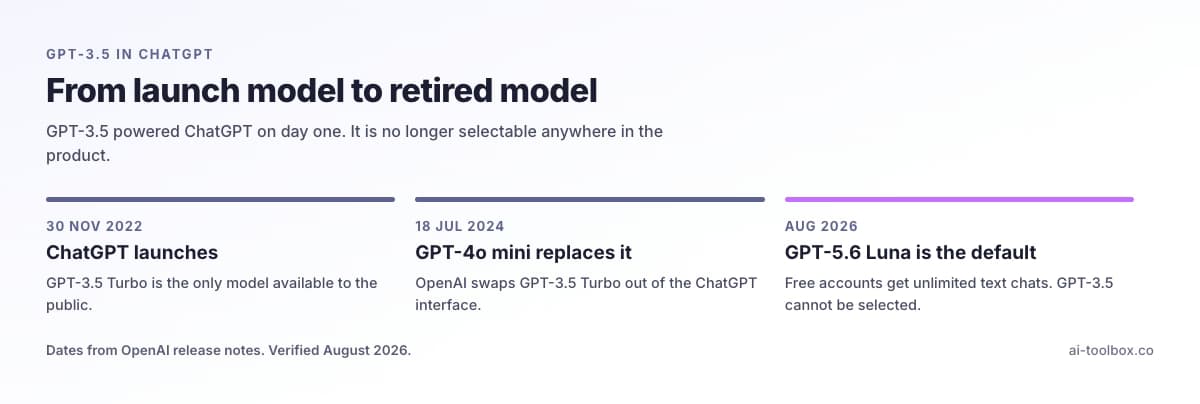 ChatGPT 3.5: Features, Uses & Model Comparison (Historical)A historical look at the ChatGPT 3.5 model, retired by OpenAI and superseded by the GPT-5.x family. Covers its features, applications, and how it compares to current models like GPT-5.5, GPT-5.4, and GPT-4.1.3 min read
 ChatGPT o3-mini: Features, Benefits & How It Compared (Historical)A historical look at OpenAI's ChatGPT o3-mini, retired in early 2026. Covers its reasoning, STEM optimization, faster responses, and cost efficiency, and how the current GPT-5.4 mini and GPT-5 mini variants now occupy this tier.8 min read
 ChatGPT 4 vs ChatGPT Free (Historical)A historical comparison of ChatGPT 4 against the free tier. GPT-4 was retired in 2026 and replaced by the GPT-5.x family. Use this guide to understand how OpenAI's tiered model lineup has evolved.2 min read
Same workflows, every AI
One extension, four modules, each with its own guide collection shaped by what that platform lacks.
FAQ
OpenAI offers GPT-6 Astra, GPT-5.6 Sol, GPT-5.6 Terra, GPT-5.6 Luna, GPT-5.5, GPT-5.5 Pro, GPT-5.4, GPT-5.4 Pro, GPT-5.4 mini, GPT-5.4 nano. GPT-4o, o3, o4-mini and earlier models were retired on February 13, 2026 and replaced by the GPT-5.x family. Free users get a default everyday model. Paid plans run GPT-5.6 Sol in chat; GPT-6 Astra appears as GPT-6 Pro in chat on Pro, Business and Enterprise, and Plus gets Astra in ChatGPT Work and Codex.
It depends on the task. GPT-6 Astra is the flagship for the hardest reasoning and agentic work, GPT-5.6 Sol handles complex professional work at a lower API price, GPT-5.6 Terra balances intelligence and cost, and GPT-5.6 Luna is tuned for high-volume, cost-sensitive work. GPT-5.5 Pro and GPT-5.4 Pro handle the most demanding reasoning; GPT-5.4 mini and nano are for quick everyday tasks.
GPT-5.6 is OpenAI's frontier family from July 2026, one step below GPT-6 Astra since September 4, 2026. The three variants share a roughly 1M-token context window and add a max reasoning effort plus an ultra mode that uses subagents for complex work. They sit above the GPT-5.5 and GPT-5.4 generations, which remain available.
No. AI Toolbox is a browser-extension layer on top of chatgpt.com, so folders, full-text search, bookmarks, export and the prompt library behave the same with GPT-6 Astra, GPT-5.6 Sol, GPT-5.6 Terra, GPT-5.6 Luna, GPT-5.5, GPT-5.5 Pro, GPT-5.4, GPT-5.4 Pro, GPT-5.4 mini, GPT-5.4 nano, and all future OpenAI models. It does not replace your ChatGPT plan or give access to models your plan lacks.
They are kept as a dated record for people comparing old conversations, citing a model that no longer exists, or tracing how OpenAI's tiers evolved. Each one is labelled Historical in its title and states which current model replaced it.
Pricing
Every guide works on the free plan. Premium removes the caps on one platform; All Access covers all four. Not an AI subscription: you keep using your own ChatGPT account.
Free
$0forever
ChatGPT Premium
$9.99/ month, or $99 once
All Access LifetimeBest value
$199once, all four modules
Put the guides to work
Install once, then folders, full-text search and export appear inside ChatGPT. The free plan has no time limit.
